.png)
There are no items in your cart
Add More
Add More
| Item Details | Price | ||
|---|---|---|---|

The Common Admission Test (CAT) is India’s most popular MBA entrance examination conducted annually for admission into prestigious business schools like the Indian Institutes of Management (IIMs) and several top MBA colleges across the country.
Every year, lakhs of students appear for CAT with one goal:
A strong CAT percentile can open opportunities in:
The Common Admission Test (CAT) evaluates candidates across three key sections:
One of the biggest myths is:
“Only students who are very strong in mathematics can crack CAT.”
Not true. Many students start serious preparation 6–8 months before CAT and still perform well with structured preparation.
Absolutely false. Every year students from commerce, arts, management, law, and science backgrounds score exceptionally well.
CAT rewards smart preparation more than endless studying.
Your first phase should focus on:
Many beginners create highly ambitious schedules like:
Build a routine you can actually sustain.
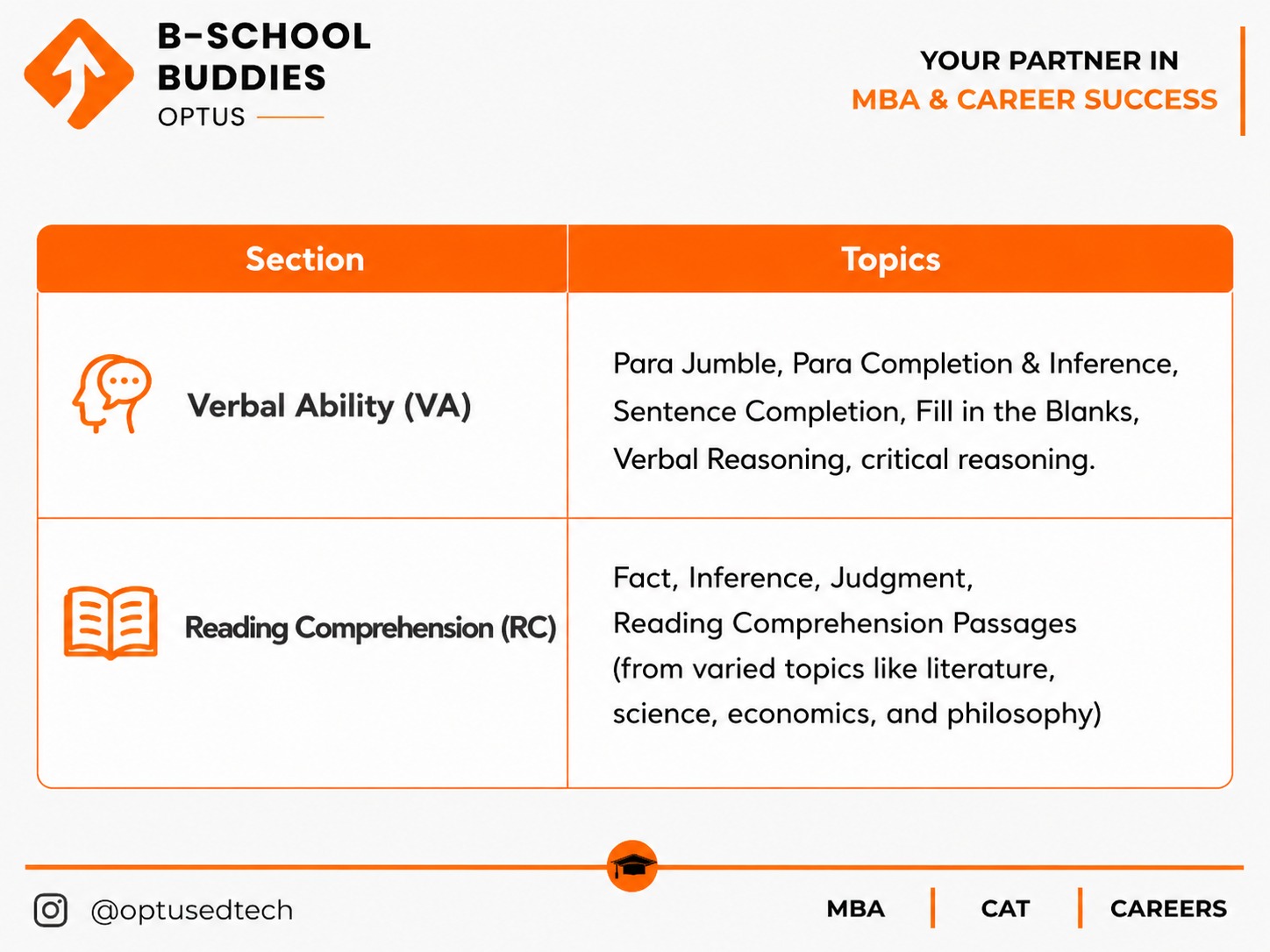
VARC is the first section of the CAT exam and must be attempted first. It is divided into two sub-parts – Verbal Ability (VA) and Reading Comprehension (RC).
The sectional time limit for the VARC section is 40 minutes.
 How to Prepare for Quantitative Aptitude: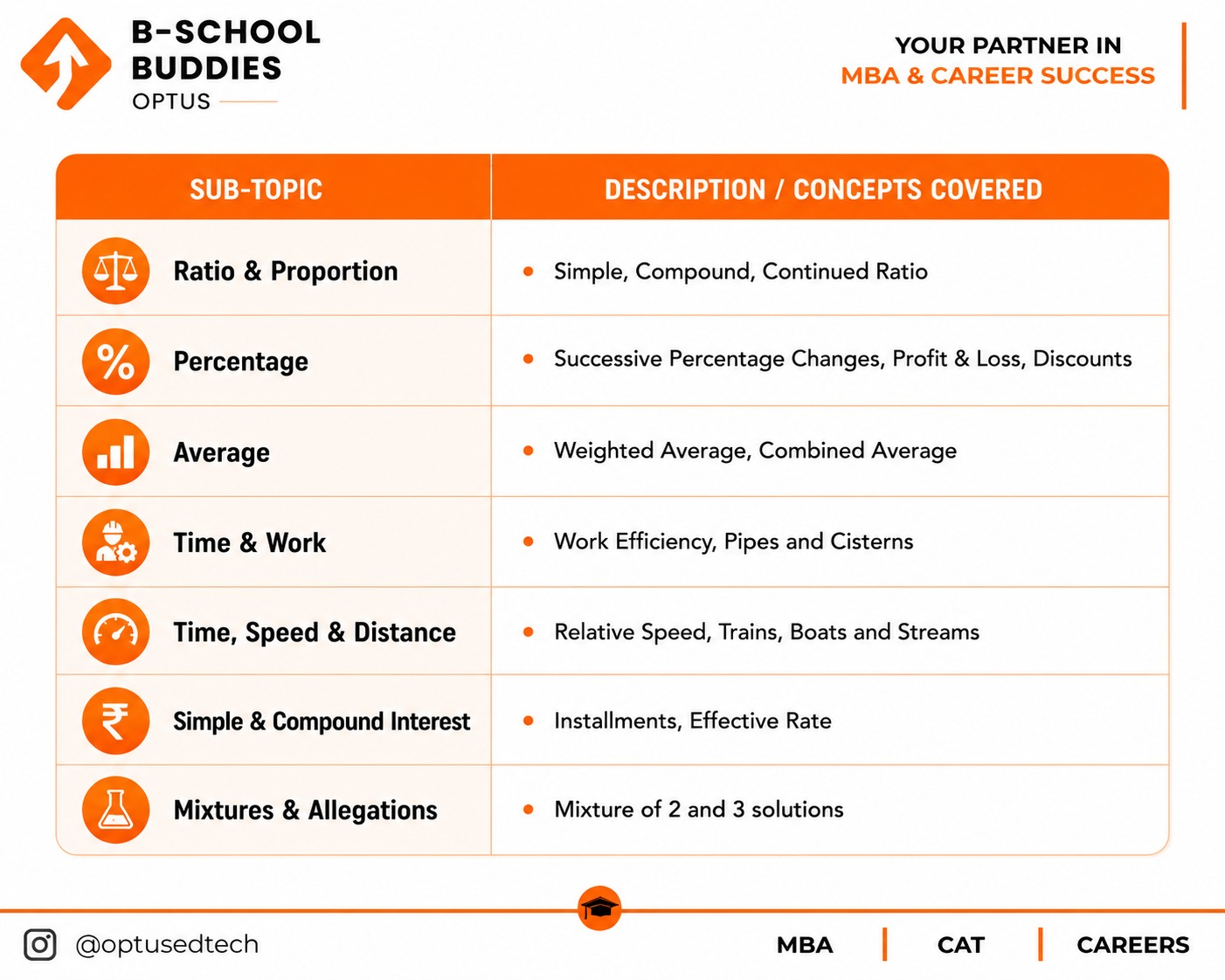
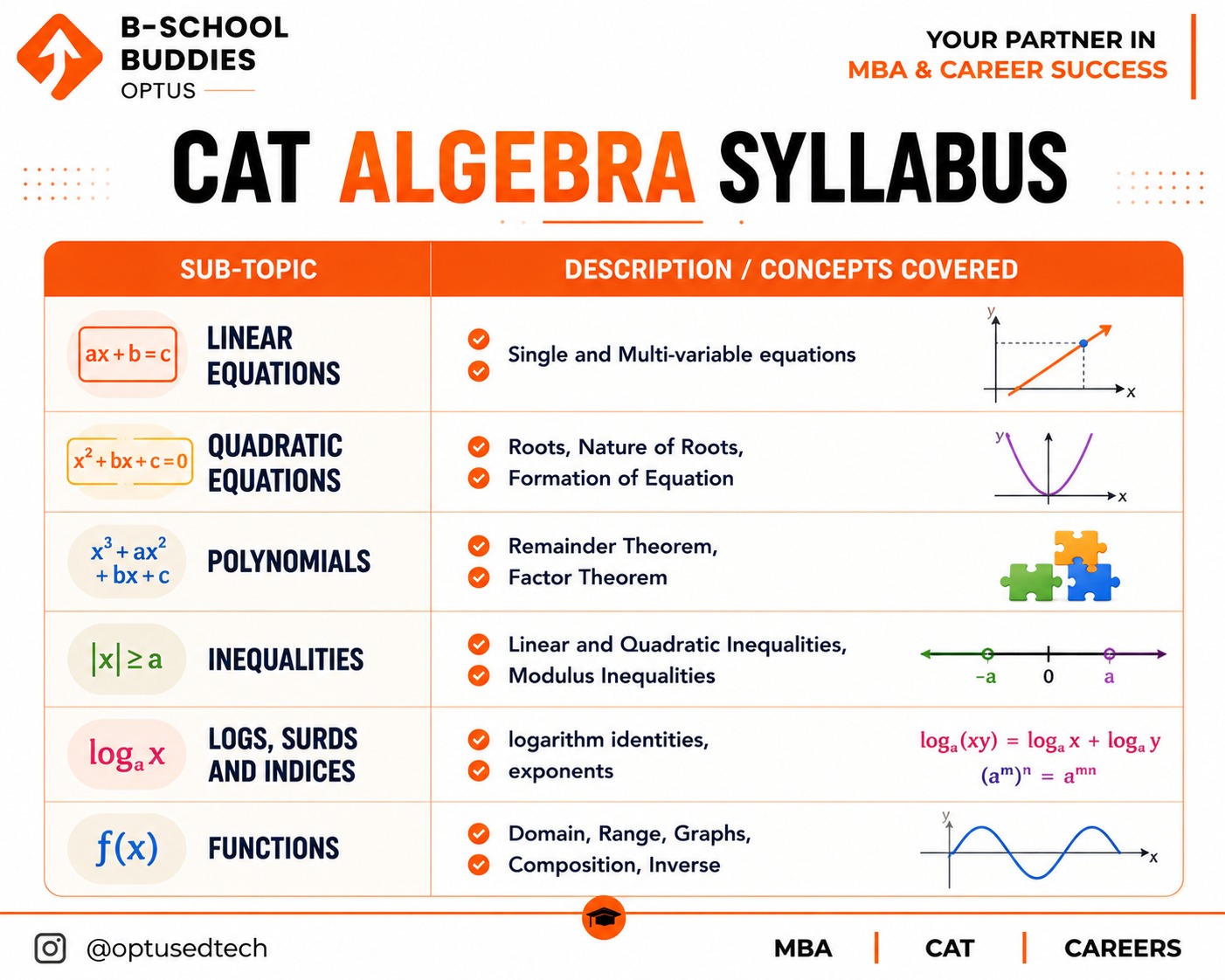
CAT Algebra Syllabus :
CAT Geometry Syllabus: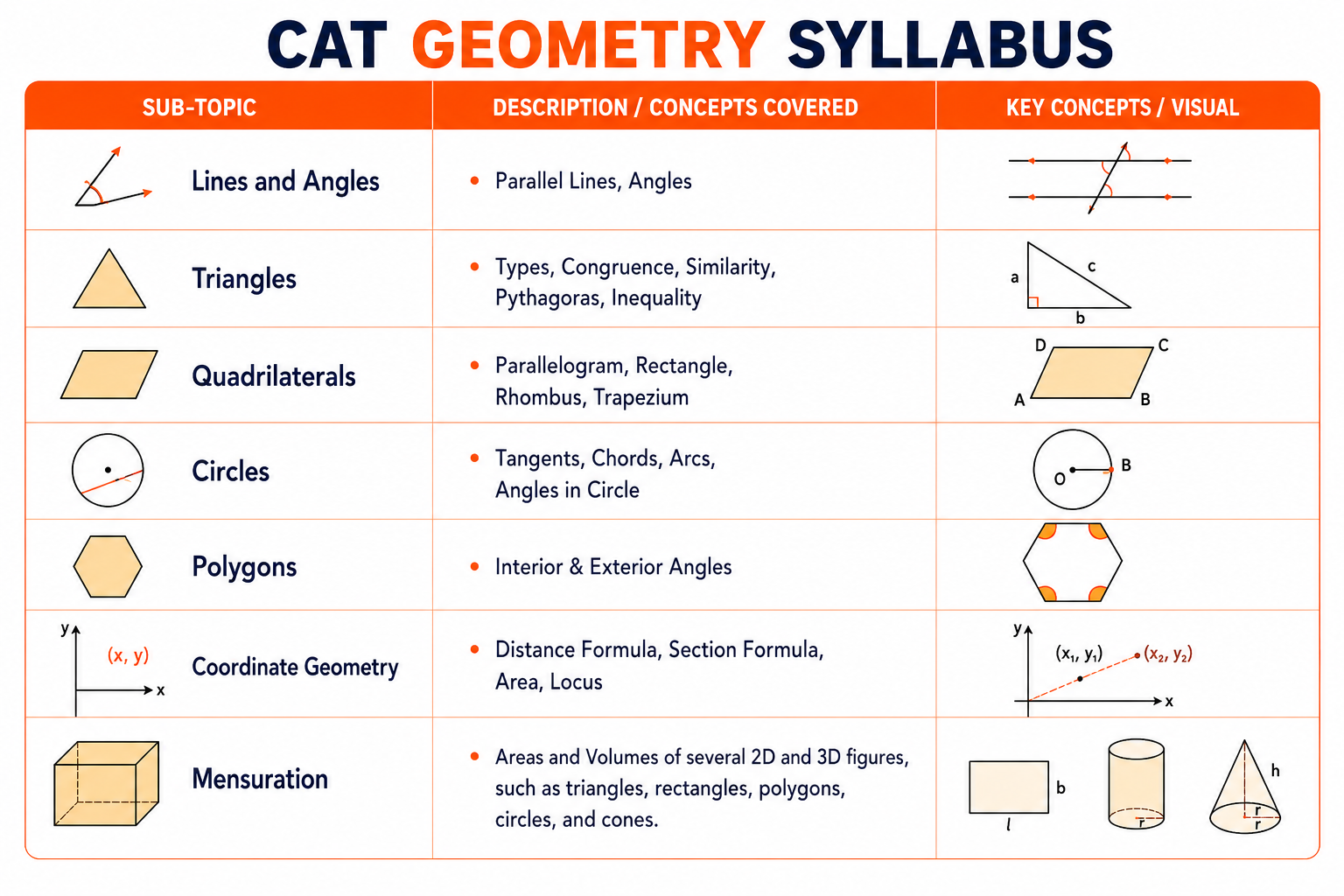
CAT Modern Maths:
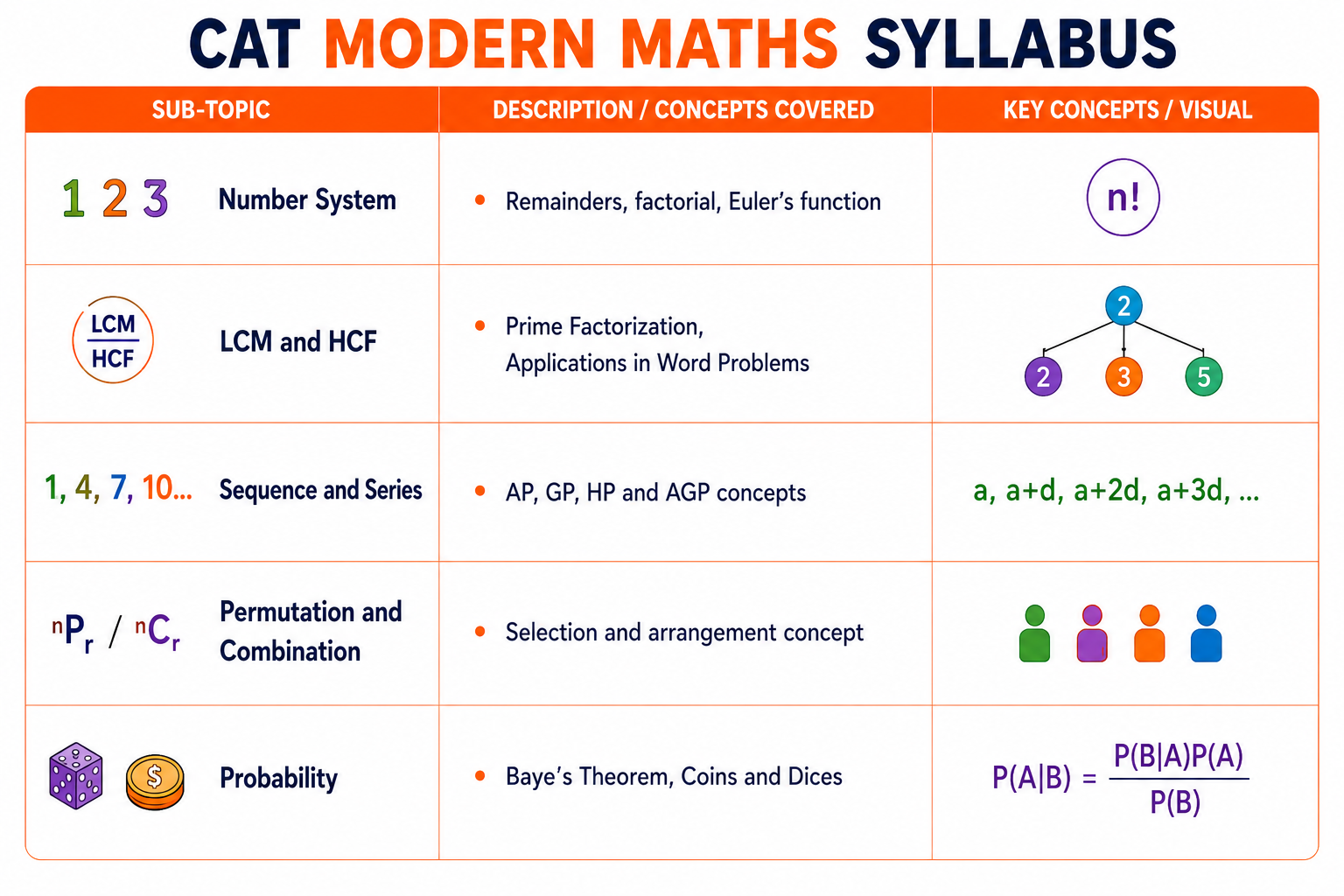
Step 4: When Should Beginners Start Mocks? A common myth:
“I’ll start mocks after completing the syllabus.”Bad idea. Start sectional mocks early and full mocks gradually. Even if scores are low initially, the learning is extremely valuable.
After every mock:
CAT Exam Syllabus 2026:
Conclusion Understanding and preparing for the CAT Exam Syllabus 2026 is the first big step toward getting into a top MBA college. The exam includes three main parts: Verbal Ability and Reading Comprehension (VARC), Data Interpretation and Logical Reasoning (DILR), and Quantitative Aptitude (QA). To do well, you need to start by knowing all the topics clearly. Focus on building your basics in each section and solve many practice questions to improve your speed and accuracy. Make sure you read regularly, practice puzzles, and solve math problems every day. Along with studying, it’s important to take mock tests and analyze your performance. These tests will help you find your weak areas and improve your time management. Don’t forget to stay updated with any changes in the exam structure on the official CAT website. If you stay consistent, follow a daily study plan, and keep revising smartly, you can confidently aim for a top score in CAT 2026. Keep your preparation strong, stay focused, and success will follow.